
A fire has broken out in Benahavis, near Marbella. This photo was taken on the road between Estepona and San Pedro. The cause of the fire is still not yet known, but follows in the wake of a serious fire in Los Montes de Malaga exactly a week ago. The fire in Los Montes devestated 260 hectares of natural park. So far this year there have been 20 such fires in Malaga Province, which experts say is within the average range of annual fires.
Monday, 18 August 2014
Saudi prince's convoy in Paris attacked by gunmen
Heavily armed men have attacked a convoy of cars belonging to a Saudi prince, stealing 250,000 euros (£200,000; $330,000), police say. The convoy was heading through northern Paris on its way to Le Bourget airport late on Sunday evening when it was raided, reports say. The gunmen seized a vehicle carrying the money and documents, later releasing the driver and two others. The convoy was said to have come from the Saudi embassy. No-one was hurt. The gunmen, reportedly armed with Kalashnikov rifles, targeted a Mercedes mini-van at 21:15 (19:15 GMT) on the northern ring road, or peripherique, at Porte de la Chapelle, on the edge of Paris.
The motorcade, belonging to a Saudi prince, was targeted by eight people in two separate vehicles who pointed their guns at the driver of the Mercedes, forcing him to stop, French media reported.
The men then drove the vehicle away with the driver and the two other Saudis inside. No shots were fired but the Saudis were later freed and the vehicle eventually found burned out.
"In the vehicle there was roughly 250,000 euros in cash and official documents from the embassy," police union spokesman Rocco Contento told BFM TV news.
There has been a weekend of terror for immigrants in Tangiers
Immigrants who are waiting in Tangiers to cross into Spain have been attacked and their homes ambushed. The NGO’s at the scene fear the aggression against the Sub-Saharans will force them to try to cross the Strait to escape whatever the weather conditions.

The problem started on Friday near the Tangiers airport. The Sub-Saharan’s were told a bus was going to Spain and some 20 women and their children took up the offer. But the bus took them to a local dance festival of African culture called Twiza which was being held in Tangiers for some days. When they realised they had been fooled they returned home, and met a group of Moroccan men armed with machetes and sticks who started to hit them.
Five of the women suffered stab wounds and others suffered abuse. Spanish volunteer, Helena Maleno, was among them and believes the violence is being organised by criminal groups. She was sexually molested by one of the men. She said the Moroccans speech was always the same, ‘We want to clear up here, go to Spain’. Last year an immigrant died when he fell off a wall during a police raid, bringing charges of murderers against the police amid violent scenes as you can seen in the video below.
Sunday, 17 August 2014
Ebola Alert In Alicante After Man Taken Ill

An ebola alert has been activated in Alicante, Spain, after a young Nigerian man was admitted to hospital with fever and vomiting. Spanish health authorities activated alert protocols after the man showed "several symptoms" of the disease.
The alert comes a week after a Spanish priest who contracted ebola while working in Liberia died in hospital in Madrid. The man was taken ill in the eastern city of Alicante Father Miguel Pajares was the first European infected by a strain of the virus that has killed more than 1,000 people in West Africa.
He was airlifted from Liberia to Spain on August 7 after becoming infected while working for a non-governmental organisation there. The 75-year-old was flown to Europe for treatment with his co-worker Juliana Bohi, a nun who has since tested negative for the disease. Elsewhere, 17 ebola sufferers have fled a Liberian clinic raided by looters who stole blood-stained sheets - sparking fears the virus will spread.
Friday, 15 August 2014
ISIS terrorists discovered in Morocco

MOROCCAN anti-terror services working in collaboration with Spanish police officers have broken up a jihadist terror cell in Morocco. In total nine members of the cell, reported to be linked to the Islamic State of Iraq and Syria (ISIS), were detained on Thursday in the three Moroccan cities of Fes, Tetouan and Fnideq. The terrorists were working to recruit new members to the cell with the objective of sending them off to fight in the conflicts currently underway in Syria and Iraq.
It is believed that some of the group made frequent visits to the Spanish city of Ceuta, located on the north coast of Morocco, with the intention of converting people to their cause and raising financial aid. The Spanish Interior Minister has linked those arrested with ISIS, and confirmed that they had received training in the use of weapons and the manufacture of explosives with the goal of participating in suicide attacks or travelling to conflict zones in the Middle-East.
It has also come to light that there were plans to carry out a terror attack on Moroccan soil. Computers and other data-storage devices used by the jihadists are currently being examined for evidence of concrete plans. The investigation remains open within the three cities, with police from both nationalities continuing to work together. Government sources commented that the operation reflects on the excellent relationship that exists between Spain and Morocco when combating terror in the region.
Luggage thieves caught at airport
THE Guardia Civil have arrested two people under suspicion of stealing suitcases from distracted airport passengers. Within the Guardia Civil brief of the Safer Tourism Plan which has been put in place to prevent theft from tourists visiting Malaga, the officers at the airport have caught two people who were taking national flights with only hand baggage and then taking advantage of distracted tourists arriving at the baggage carousels to steal their luggage while they were looking away. On several occasions they also, allegedly, pick-pocketed passengers as well as taking their hand baggage while they were retrieving their check in luggage. Investigating officers calculate that they have stolen around €21,000 worth of luggage and wallets.
Ebola outbreak vastly underestimated

The death toll from the world's worst outbreak of Ebola stood on Wednesday at 1,069 from 1,975 confirmed, probable and suspected cases, the agency said. The majority were in Guinea, Sierra Leone and Liberia, while four people have died in Nigeria. The agency's apparent acknowledgement the situation is worse than previously thought could spur governments and aid organisations to take stronger measures against the virus. "Staff at the outbreak sites see evidence that the numbers of reported cases and deaths vastly underestimate the magnitude of the outbreak," the organisation said. "WHO is coordinating a massive scaling up of the international response, marshalling support from individual countries, disease control agencies, agencies within the United Nations system, and others." International agencies are looking into emergency food drops and truck convoys to reach hungry people in Liberia and Sierra Leone cordoned off from the outside world to halt the spread of the virus, a top World Bank official said. In the latest sign of action by West African governments, Guinea has declared a public health emergency and is sending health workers to all affected border points, an official said. An estimated 377 people have died in Guinea since the outbreak began in March in remote parts of a border region near Sierra Leone and Liberia. Guinea says its outbreak is under control with the numbers of new cases falling, but the measures are needed to prevent new infections from neighbouring countries.
"Trucks full of health materials and carrying health personnel are going to all the border points with Liberia and Sierra Leone," Aboubacar Sidiki Diakit president of Guinea's Ebola commission, said late on Wednesday. As many as 3,000 people are waiting at 17 border points for a green light to enter the country, he said. "Any people who are sick will be immediately isolated. People will be followed up on. We can't take the risk of letting everyone through without checks."
Arrested for allegedly throwing two suitcases of cocaine out of a hotel window

Poice have established that a 39-year-old Irish man who was arrested in Spain after allegedly throwing two suitcases of cocaine out of a hotel window is a criminal who was previously targeted here in a proceeds-of-crime case. The suspect, who remains in custody in Valencia, has been named as Philip Grendon from Greenfort Drive, Clondalkin, and also with an address at Spiddal Road, Ballyfermot. Grendon's brother, Brian, is a member of a major west Dublin drugs gang who have been constant targets of gardai for 15 years. Already this year, officers based in Ballyfermot have been involved in the seizure of more than €1m worth of drugs from this crew who are considered one of the most organised and longest-established in the country.
The bizarre incident for which Grendon was arrested in Valencia happened last Friday just before 10pm at the four-star Tryp Valencia Oceanic Hotel. Police are said to be working on the theory that the alleged drugs trafficker, who had checked into the hotel a few hours earlier, confused noise from other guests entering and leaving their rooms with a rival gang trying to steal his drugs after suffering a paranoia attack. It is alleged that Grendon also removed ceiling tiles in his room, along with an air vent in an apparent attempt to hide the stash.
The 55kg of cocaine in the cases would have an estimated street value of more than €3.8m in Ireland. Sources who know Grendon say they are "surprised" that he would be trusted by a gang to be in charge of such a huge drugs haul. "Philip was always known to be a paranoid individual, but if what the Spanish police are saying is true, this is taking paranoia to a whole new level," a senior source said. Grendon's younger brother is convicted heroin dealer Brian Grendon (37), who was jailed for six years in December 2002 after he was busted with almost €2m worth of heroin in Palmerstown, west Dublin, the year before. shootings Brian Grendon was previously described in court by a senior detective as being linked to a gang who had in the past "used fatal shootings of anyone who compromised their business".
Philip Grendon appeared in court in Dublin in February 2012 when gardai prosecuted him under proceeds of crime legislation. Some of his associates were targeted by gardai as part of Operation Jumbo in 2002. They included murder victim David McCreevy (23), who was shot dead in Tallaght in 2002.
Wednesday, 13 August 2014
Spain to probe cigarette smuggling Crime.

EU's anti-fraud office on Monday urged Gibraltar and Spain to launch legal action after it found signs that organised crime was behind a rise in cigarette smuggling in southern Spain, AFP reports. The European Anti-Fraud Office (OLAF) made the recommendation after completing a probe it launched in August 2013 at the request of Madrid into a sharp rise in cigarette smuggling across the border between Gibraltar and Spain between 2009 and 2013. "The OLAF investigation has raised a number of concerns regarding the link between a significant increase in the size of the Gibraltar market for cigarettes over the past four years and the subsequent increase of cigarette smuggling across the frontier," a spokesman for the anti-fraud office said. "The concerns include indications of the involvement of organised crime," it added. "The OLAF final case report, and recommendations to initiate judicial proceedings related to the findings of the report, have been sent to the Spanish General State Prosecutor and to the Gibraltar Attorney General." Widespread cigarette smuggling between the tiny, low-tax British territory of Gibraltar to Spain is a major irritant in their frayed diplomatic relations. Smugglers buy the cigarettes in large volumes in Gibraltar at a price much lower than is charged in Spain, where the government in 2012 increased the sales tax to help plug a gaping public deficit. Spain in August introduced stringent border checks at its border with Gibraltar, leading to lengthy queues for motorists, in what it said was a move aimed at clamping down on cigarette smuggling.
But Gibraltar argues the stepped-up border controls are in retaliation for the installation of an artificial reef in its waters that has prevented Spanish boats from fishing there. Gibraltar Chief Minister Fabian Picardo welcomed the anti-fraud office report and said the territory wanted to work together with Spain to investigate the cigarette smuggling. "We wish any necessary investigations in this and in all areas to be carried out jointly between the competent Spanish and Gibraltar authorities in a genuine spirit of cooperation," he said. The government of Gibraltar said cigarette smuggling was already being brought under control thanks to the "draconian" measures it introduced in January. These include the introduction of searches of vehicles crossing into Spain and giving customs and police officers greater powers to fight smuggling. The Spanish government meanwhile said the anti-fraud office's report "justified" its "work in the fight against fraud and the underground economy". Spain ceded Gibraltar to Britain in 1713 but has long argued that it should be returned to Spanish sovereignty. London says it will not do so against the wishes of Gibraltarians, who are staunchly pro-British.
First Spaniard dies of Ebola
confirmed by the Madrid's health department that a 75-year-old Spanish priest, Miguel Pajares has died in Madrid’s Carlos III hospital from Ebola. The Spanish priest who was recently repatriated from Liberia, Africa last Thursday had been in isolation in Saint John of God hospital in the capital of Monrovia. It is known that he contracted the Ebola virus from the Director of the Hospital after a visit. The director is also known to have died. Miguel Pajares was being treated with an experimental drug ZMapp which is designed to fight the deadly virus, but failed to respond to the medication.
The drug ZMapp is a treatment that is made by a private US company and is still in intensely early stages and had previously been only tested on monkeys. In a statement the health ministry said that the drug arrived to the hospital late on Saturday evening to treat the 75-year-old. The drug ZMapp though in very early stages, was only allowed by the Spanish drug safety agency under “exceptional importation” to be used in the use of a non-authorised medication because of an incident where a patient’s life is in danger.
Saturday, 12 July 2014
Reclaiming Bonhoeffer Author | WMRA
Charles Marsh, the acclaimed author of Reclaiming Bonhoeffer discusses his new book, Strange Glory: A life of Dietrich Bonhoeffer, which the Wall Street Journal calls “truly beautiful and heartbreaking.” Dietrich Bonhoeffer was a German theologian and anti-Nazi dissident who was executed by the Nazis just weeks before the end of the war in Europe. Marsh is a Guggenheim fellowship winner and senior professor at UVa. His past Bonhoeffer book was praised by Bonhoeffer best friend (and first biographer) Eberhard Bethge. His new Bonhoeffer book is published by Random House.
Friday, 27 June 2014
Higher Consciousness May Alter Genetic Structures: Deepak Chopra
Higher Consciousness May Alter Genetic Structures: Deepak Chopra Deepak Chopra, M.D. In a fascinating, progressive and optimistic article in the San Fransisco Chronicle, Deepak Chopra - a spiritual icon who is by training a medical doctor - commented on the results of a recent study that showed as little as eight weeks of meditative practice alters brainwave patterns and, most likely, the structure of the brain itself. The notion that the brain is "plastic" and continues to grow and evolve through the lifetime of an individual is a relatively recent finding. It is only in the past several decades that biologists, like Rupert Sheldrake, have examined how consciousness itself (or, perhaps, the quality of consciousness) shapes the brain. The so-called 'mind/body problem' is whether consciousness itself gives rise to the brain as the organ of consciousness, or whether the brain gives rise to consciousness. Eastern traditions dating back to the mists of time clearly expound the consciousness-birthing-brain view, while Western science (at least until recently) implicitly and explicitly embraced the brain-birthing-consciousness model. In most instances, Western science ignored questions of what consciousness "is" because it is inherently a subjective phenomenon which lies beyond the purview of science's objective methodology. Consciousness studies were therefore confined as a branch of metaphysics, philosophy or theology, rather than a part of the 'hard sciences.' It is only very recently that vastly improved technologies have allowed researchers to study the quality of consciousness objectively. The study reviewed by Chopra followed up years of research which showed that the brainwaves of Buddhist monks steeped in years of meditative practice differed significantly from the brainwaves of non-meditators. The recent study at the Massachusetts General Hospital is profoundly optimistic and novel in that it shows how rapidly adoption of a meditative practice alters an individual's brain functions. Implicitly, it demonstrates that the potential for higher consciousness is a universal, built-in human trait. It infers that the level of consciousness changes the brain's physiology - which would support the consciousness-birthing-brain view - and begs the question of just "how" higher consciousness and awareness alters both functionality and brain structure. Chopra's comments embrace the rather radical notion (from a Western scientific viewpoint) that consciousness is an evolutionary force that operates not only across generations, but during the lifetime of the individual him or herself. Chopra specifically comments on how the experience of higher states of consciousness may change an individual's genetic structures over the lifetime of the meditator. He writes: "I imagine the next step will be the discovery that meditation changes the expression of your genes. Dr. Dean Ornish, who has championed meditation, along with diet and exercise, as a proven way to reverse heart disease, recently discovered changes to the expression of more than 400 genes among those who followed his program of positive lifestyle habits. The link between the brain and genes does come as something new, and it shows promise of overturning the most basic ideas about both. For decades it was taken as gospel in medical school that neither the brain nor our genes could be altered in any significant way (except negatively, through aging and disease), but now we know that the brain is far more dynamic and susceptible to change than anyone ever supposed. Moreover, any change inside the brain must be mediated by genetic expression. That is, a brain cell does things like grow new connections and heal itself only through the production of proteins and enzymes, and these require genetic signals — they don't happen on their own" Chopra calls the implications of the recent study's findings "startling." He asserts that "(t)here is a direct path that begins in the mind — with meditation, mindfulness, or more basic things like beliefs and emotions — and then the path leads to the genes, where signals are sent that modify the brain cell, which in turn sends its own signals in the form of neurotransmitters to every cell in the body." "The old phrase, "biology is destiny," will have to be seriously re-examined," he writes. He suggests that "(a) good replacement would be "consciousness is destiny," which is the guiding reason that meditation arose in the first place," and foresees "enormous opportunities for personal freedom." "Instead of being dictated to by your genes and (the) chemical processes in the brain," Chopra suggests that "it may turn out that you are the author of your own life, capable of change, healing, creativity, and personal transformation." It is a fascinating, progressive and optimistic view that embraces and seeks to explain the findings of thousands of years of Eastern meditative teachings.
Spiritual . . . But Not Religious: Osho
"Sell your cleverness and buy bewilderment," urges Rumi, the 13th century Sufi mystic and poet
Eckhart Tolle
"The physical needs for food, water, shelter, clothing, and basic comforts could be easily met for all humans on the planet, were it not for the imbalance of resources created by the insane and rapacious need for more, the greed of the ego. It finds collective expression in the economic structures of this world, such as the huge corporations, which are egoic entities that compete with each other for more. Their only blind aim is profit. They pursue that aim with absolute ruthlessness. Nature, animals, people, even their own employees, are no more than digits on a balance sheet, life objects to be used, then discarded." -- Eckhart Tolle -- ("A New Earth: Awakening to Your Life's Purpose")
Spiritual . . . But Not Religious: The Paradox of Awakening
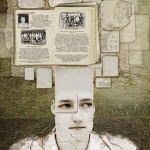
"These flashes of greater consciousness," says polymath spiritual teacher, Theodore Nottingham, "are the unexpected result of strenuous efforts made in order not to lose ourselves in the rush of outer circumstances and to be cleansed of the poisons of negativity, as well as to maintain a heightened awareness grounded in the present moment. "
Sunday, 31 March 2013
Understand the inherently peaceful presence of Awareness the art of Living in the NOW
Understand the inherently peaceful presence of Awareness the art of Living in the NOW, and see that this peace is not dependent upon the condition of the mind, body or world, just as a screen is not dependent on the quality of the words or images that appear on it.
Friday, 29 March 2013
The addicted brain is distinctly different from the nonaddicted brain, as manifested by changes in brain metabolic activity, receptor availability, gene expression, and responsiveness to environmental cues
There are many biological factors that are involved with the addicted brain. "The addicted brain is distinctly different from the nonaddicted brain, as manifested by changes in brain metabolic activity, receptor availability, gene expression, and responsiveness to environmental cues" (2) In the brain, there are many changes that take place when drugs enter a person's blood stream. The pathway in the brain that the drugs take is first to the ventral tegmentum to the nucleus accumbens, and the drugs also go to the limbic system and the orbitofrontal cortex, which is called the mesolimbic reward system. The activation of this reward system seems to be the common element in what hooks drug users on drugs (2).
Drugs seem to cause surges in dopamine neurotransmitters and other pleasure brain messengers. However, the brain quickly adapts and these circuits desensitize, which allows for withdrawal symptoms to occur (3). Drug addiction works on some of the same neurobiological mechanisms that aid in learning and memories (3). "This new view of dopamine as an aid to learning rather than a pleasure mediator may help explain why many addictive drugs, which unleash massive surges of the neurotransmitter in the brain, can drive continued use without producing pleasure-as when cocaine addicts continue to take hits long after the euphoric effects of the drug have worn off or when smokers smoke after cigarettes become distasteful." (4)
Since memory and pleasure zones are intertwined in the brain, many researchers have been using psychological approaches to stop drug use. Many rehabilitation centers have used classical conditioning to rehabilitate drug addicts. They combine exposure to drugs combined with cognitive scripts, like statements how drugs have destroyed a person's life or what can be accomplished without using drugs, according to DeLetis (5). By using classical conditioning, the drugs addicts pair the drugs with negative connotations and properties. "Adverse withdrawal symptoms can function as an instrumental negative reinforcer and can be linked to the opponent process theory of motivation." (6) However, drug addicts may relapse and start using again because of many environmental "cues", which are external forces that are associated with drug use in their lives. When the drugs addicts see these cues, their brain circuitry, especially the orbitofrontal cortex become hyperactive and causes these people to start craving drugs again (2). No matter how successful the rehabilitation treatment is, once those "cues" are around, the drug addicts remember how pleasurable the drugs felt and relapse into drug abuse again.
Through all of the research done about drug addiction and its affects on the brain, one can see how drug addiction is considered a brain disease. Drug addiction is a disabling disease and can ruin a person's life. By taking drugs, a person's brain becomes "rewired" to tolerate high amounts of dopamine neurotransmitters, but once those high amounts of dopamine cease to exist, the person experiences withdrawal symptoms. However, there are ways drug addicts can control their drug intake by using classical conditioning techniques, which allows them to associate drugs with negative attributes.
Wednesday, 27 March 2013
Bill Wilson is on record for having found a solution in 1960 for treating anxiety and depression using vitamin B-3 therapy and worked tirelessly for eleven years begging for its inclusion into A.A. recovery circles.
The Serotonin Support Group (SSG)
Is a mutual support group for people who suffer from low Serotonin levels, wishing to participate in a support group that uses as one method a vitamin supplement as a method of replacement or addition to a diet to help the sufferer.The historical basis of this form of nutritional treatment was discovered and researched by Bill Wilson of Alcoholics Anonymous and it is to promote this Legacy to persons who suffer from low serotonin uptake and depression that the Group was formed.Bill Wilson wished to add a step to the 12 he had produced for AA. We struggle to make that possible and fulfill his promise. Without detracting from the message of recovery in the twelve steps of Alcoholics Anonymous. If alcoholics and addictive abusers of other drugs have specific chemical imbalances in the brain, and if these imbalances turn out to be reliable enough and measurable enough in sufficiently large numbers of human addicts, it is natural to wonder whether, eventually, science can find a way to correct them.
Some sort of neurotransmitter cocktail, maybe.
Bill Wilson is on record for having found a solution in 1960 for treating anxiety and depression using vitamin B-3 therapy and worked tirelessly for eleven years begging for its inclusion into A.A. recovery circles. His desire was to help alcoholics stay recovered. This means he would have immediately brought this mineral replacement therapy that eliminates alcohol cravings forth without exception. Andrew W. Saul, includes Bill Wilson as an inductee of the Orthomolecular Medicine Hall of Fame at the Hotel Vancouver, British Columbia, Canada, April 29, 2006 in his induction speech, “…To this day, selective history records A.A.’s 12-Step Program, but has forgotten, or deliberately purged, what Bill wanted to be A.A.’s 13th step – orthomolecular therapy with vitamin B3.”[Lee Brack1] In February 2009, Orthomolecular Medicine’s founder, Abram Hoffer and Bill Wilson’s good friend, clarified to me over the phone, “..yes, Lee, he wanted to share this information as an added step and talked about it all the time because he felt so strongly about nutrition…” Abram Hoffer passed away a few months later in May having lived healthy and happily for ninety one and a half years.
The results strongly suggest that the mechanism of depression after alcohol drinking may be related to serotonin.
| We examined tryptophan and serotonin (5-hydroxytryptamine) levels in the blood after consumption of alcohol. Forty-five minutes after drinking, whole blood serotonin concentration was significantly reduced, whereas no changes were observed in tryptophan level. The diurnal rhythm of 5-HT in subjects who the day before had drunk alcohol was quite different from the control group, but very similar to that of patients with depression. The results strongly suggest that the mechanism of depression after alcohol drinking may be related to serotonin. |
The important thing with serotonin, is to keep it at steady levels.
The important thing with serotonin, is to keep it at steady levels. The medicines that raise the level of serotonin in the brain do so by slowing the reabsorbtion of serotonin. The alcohol increases the availible serotonin for a bit and then it drops off quickly, leaving the depressed person feeling worse, and they tend to not take the medicine correctly when they feel badly or are drunk. High serotonin levels do not mean somebody will feel happy or good, It makes it more likely that they won't feel realy bad.
Subscribe to:
Posts (Atom)